
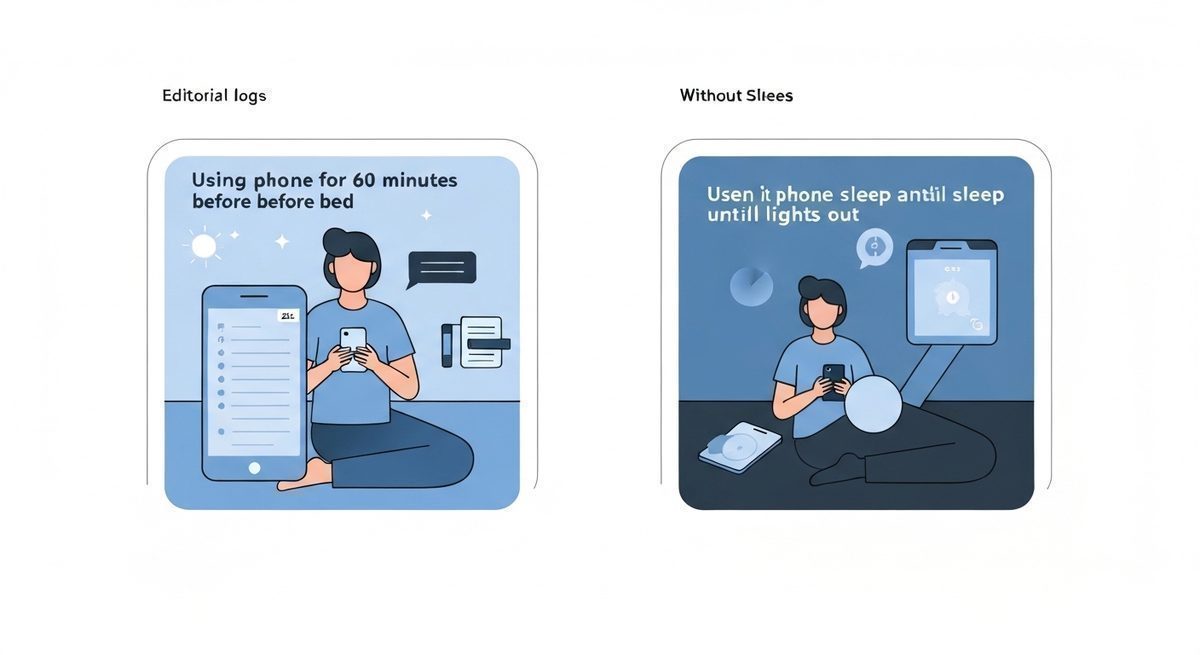
Effect snapshot
| Intervention | Stop phone use 60 minutes before bed vs using until lights out |
| Outcome | Time to fall asleep |
| Effect | 10–20 percent relative decrease |
| Confidence | study |
| Context | Adults 18–35, self-reported and wearable sleep, 2020–2025 |
Sources
What changes
A screen-free wind-down hour is often associated with a 10–20% relative reduction in time to fall asleep in short interventions.
When this tends to work
- Conditions similar to: Adults 18–35, self-reported and wearable sleep, 2020–2025
- You can measure
Time to fall asleepreliably - The intervention is implemented consistently, not half-measured
When to be careful
- Your audience or product differs materially from the cited context
- Compliance costs or second-order effects outweigh the lift
- Evidence label is study—treat wide ranges as planning bands, not promises
Practical takeaway
Use the cited range for prioritization and test design. Verify against your own data before scaling.