
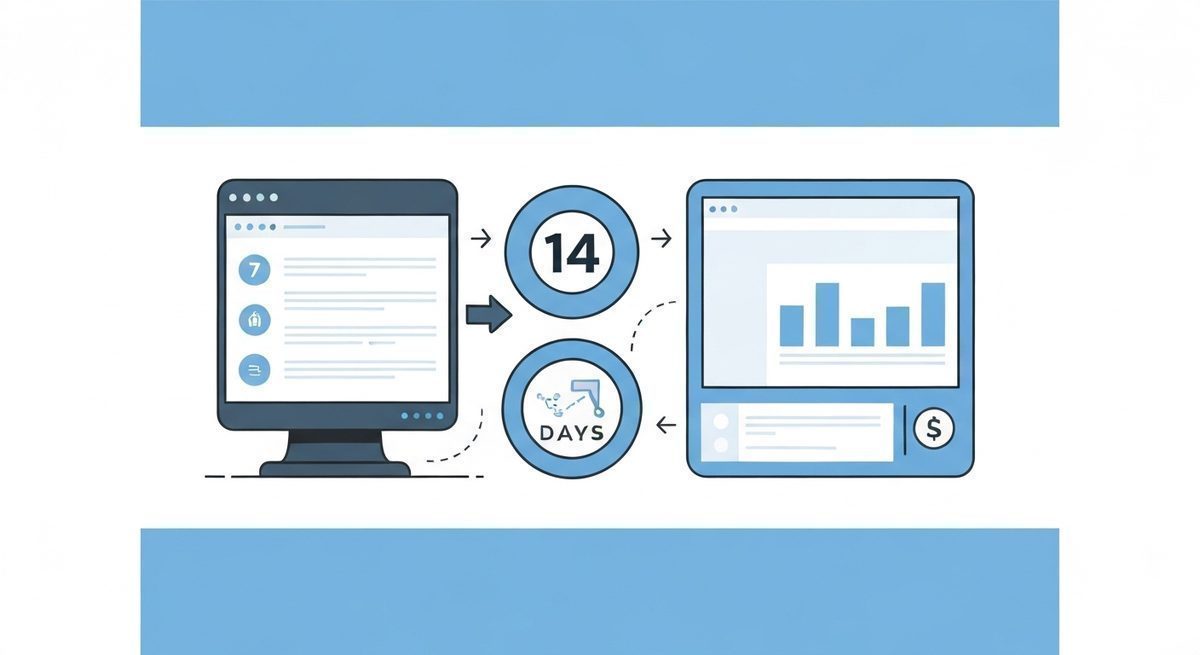
Effect snapshot
| Intervention | Extend free trial from 7 days to 14 days |
| Outcome | Trial-to-paid conversion rate |
| Effect | 8–20 percent relative increase |
| Confidence | estimate |
| Context | B2B and prosumer SaaS, self-serve signup, 2022–2025 |
Sources
What changes
Longer 14-day trials are often cited for an 8–20% relative lift in trial-to-paid versus 7-day trials, depending on time-to-value.
When this tends to work
- Conditions similar to: B2B and prosumer SaaS, self-serve signup, 2022–2025
- You can measure
Trial-to-paid conversion ratereliably - The intervention is implemented consistently, not half-measured
When to be careful
- Your audience or product differs materially from the cited context
- Compliance costs or second-order effects outweigh the lift
- Evidence label is estimate—treat wide ranges as planning bands, not promises
Practical takeaway
Use the cited range for prioritization and test design. Verify against your own data before scaling.